12 Brand Archetypes + Examples
At DoubleShot Creative, we believe every brand has a unique personality that sets it apart.
Understanding your brand archetype helps shape your identity, guide your marketing, and define how you connect with your audience. Think of it as the character at the heart of your brand—embodying the values and emotions that make your business memorable.
What is a brand archetype?
Brand archetypes are universal personality frameworks that define how your brand behaves, communicates, and connects emotionally with your audience.
Rooted in human psychology and storytelling, they help your brand feel recognizable, relatable, and consistent.
They’re also a key part of your overall brand strategy—shaping how your brand archetype shows up, communicates, and resonates.
If you’re exploring how personality translates into real-world brand expression, take a look at our breakdown of brand personalities we’re crushing on.
If you’re exploring how personality translates into real-world brand expression, take a look at our breakdown of brand personalities we’re crushing on.
In simple terms:
- Your brand identity = how you look
- Your brand archetype = who you are
A clearly defined archetype helps you:
- Speak with consistency
- Build emotional connection
- Stand out in a crowded market
Why Brand Archetypes Matter
In today’s saturated landscape, products don’t differentiate—personality does.
Brand archetypes help you:
- Create emotional resonance with your audience
- Build brand recognition beyond visuals
- Maintain consistency across channels
- Guide messaging, tone, and storytelling
- Strengthen brand positioning
Your archetype becomes a foundational part of your brand strategy—not just a creative exercise.
When paired with strong visual execution, that personality becomes even more impactful. See how this translates in real-world applications in our article on how graphic design can impact your business.
The 12 Brand Archetypes
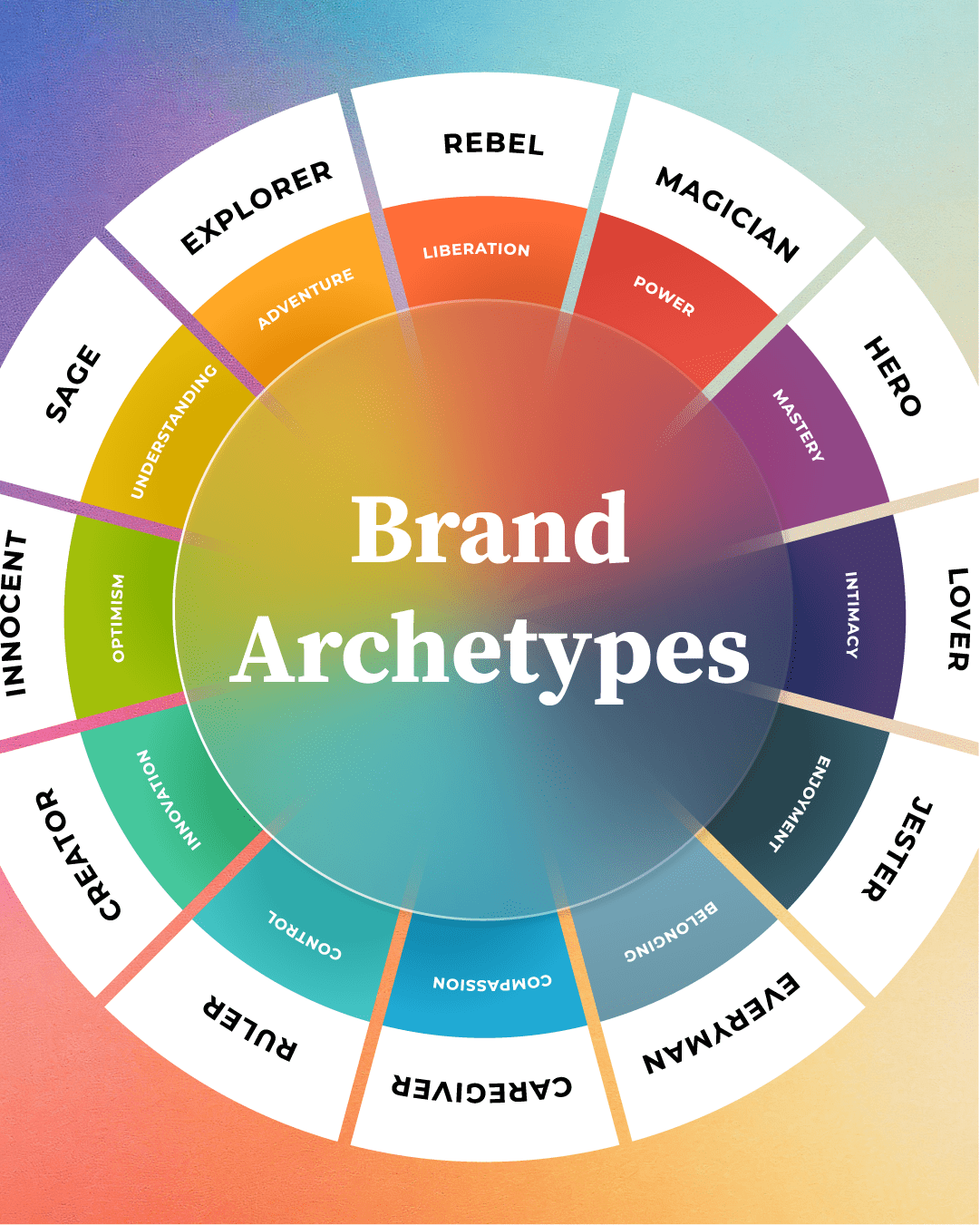
Below are the 12 core brand archetypes, each rooted in human motivation and behavior.
1. The Innocent
The Innocent Brand Archetype is all about finding joy and spreading happiness. They are pure, honest, and always see the bright side. They strive to create a simple, wholesome, and carefree experience for their audience.
Values: Purity, simplicity, optimism
Personality Traits: Honest, sincere, trustworthy
Examples: Dove, Coca-Cola, Honest Co.
Innocent brands focus on creating a simple, wholesome experience. Dove’s Real Beauty campaign redefined beauty standards by celebrating women’s natural beauty, while Coca-Cola’s Share a Coke personalized their iconic product to spread happiness and connections.

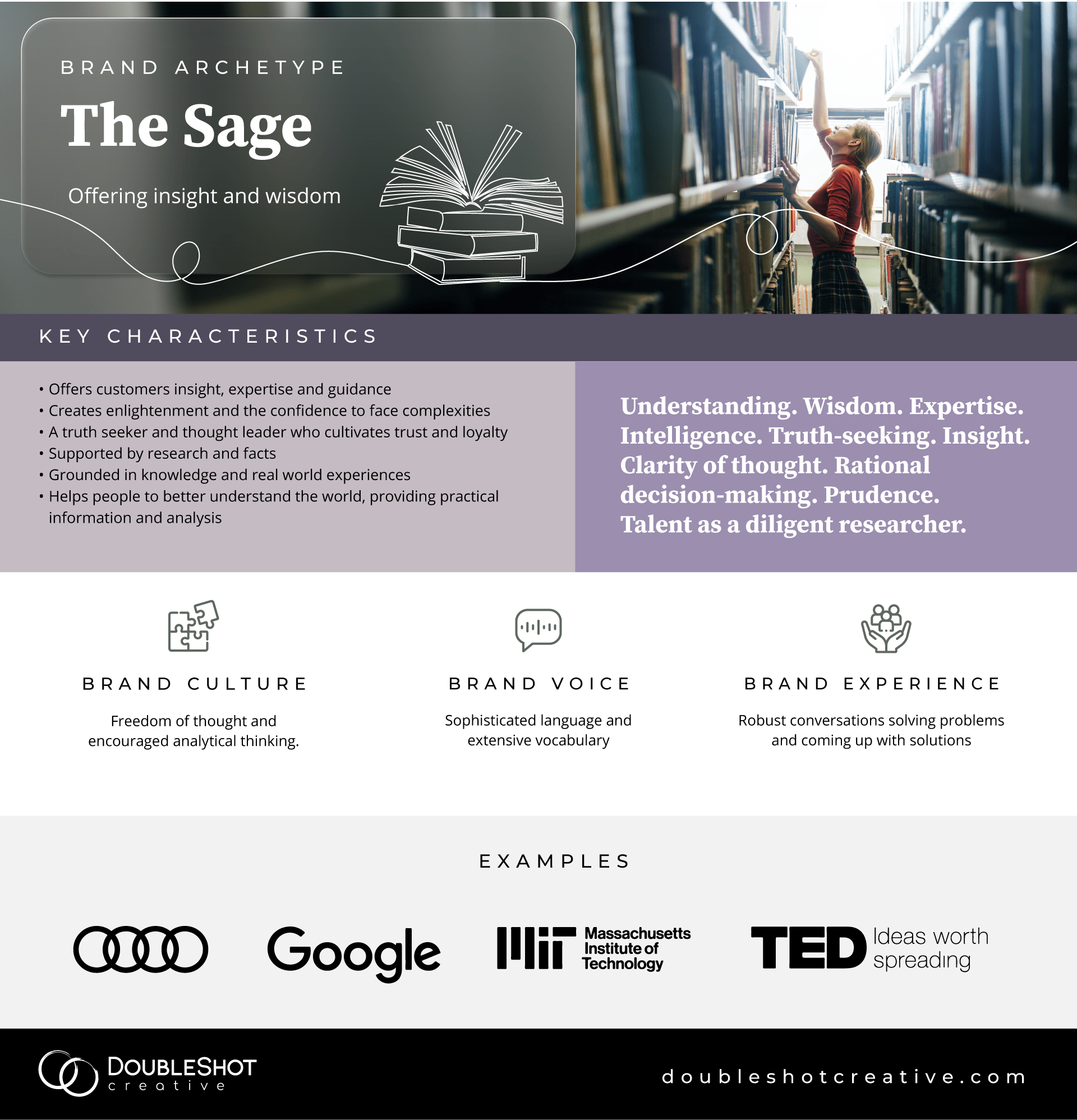
2. The Sage
The Sage Brand Archetype is constantly seeking the truth. They tend to be perfectionists and don’t settle for anything but what is right and true. They thrive on knowledge and being in the know, and they enjoy sharing their findings with others to help benefit everyone.
Values: Wisdom, knowledge, insight
Personality Traits: Wise, insightful, analytical
Examples: Audi, BBC, CNN, MIT, TED, The New York Times, Google
Sage brands thrive on seeking truth and providing knowledge. Google’s Year in Search reflects the global pursuit of knowledge, while The New York Time’s The Truth is Hard campaign highlights the importance of investigative journalism in seeking truth.
3. The Explorer
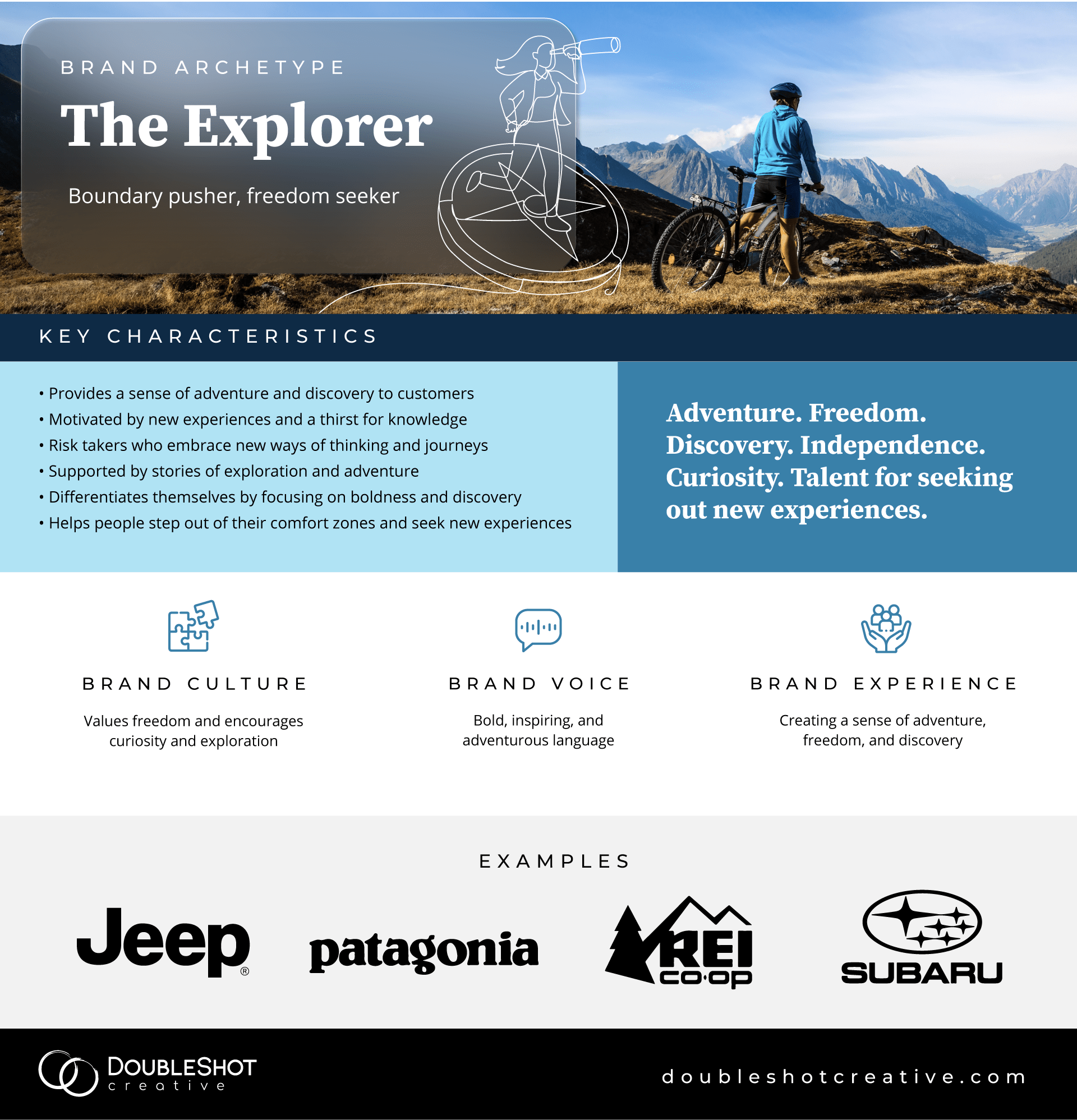
The Explorer Brand Archetype is about seeking out new experiences and embracing the unknown. They value freedom and independence, constantly striving to discover new horizons and break away from the mundane.
Values: Freedom, adventure, discovery
Personality Traits: Curious, independent, adventurous
Examples: National Geographic, REI, Jeep, Patagonia, Subaru
Explorer brands embody adventure and independence. REI’s #OptOutside is a standout campaign encouraging people to enjoy the outdoors, while Jeep’s Go Anywhere, Do Anything epitomizes the spirit of adventure and exploration.
4. The Rebel
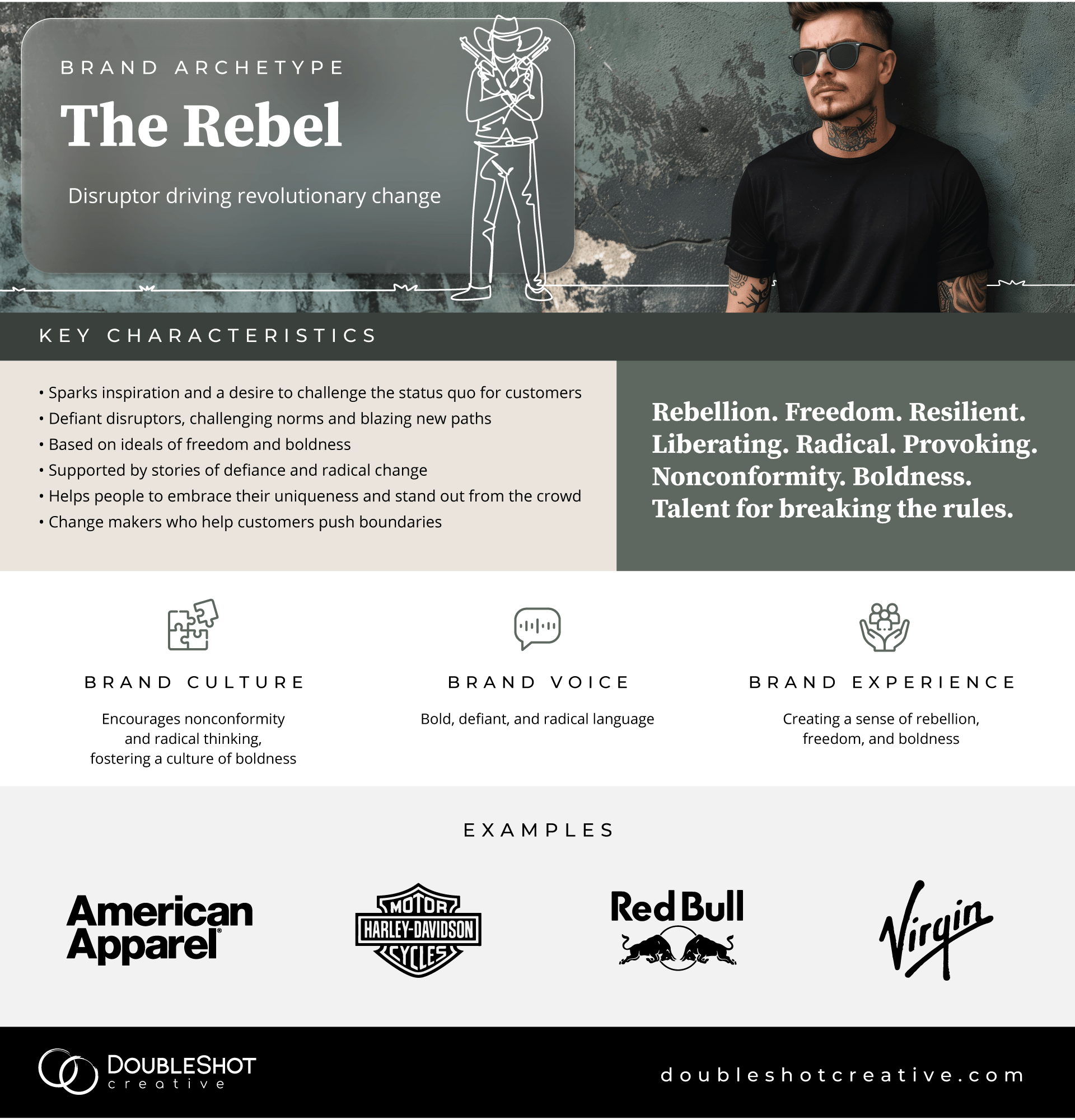
The Rebel Brand Archetype is about breaking the rules and challenging the status quo. They value radical freedom and are not afraid to be bold and rebellious.
Values: Nonconformity, independence, creativity
Personality Traits: Bold, rebellious, unconventional
Examples: Harley-Davidson, Virgin, Red Bull
Rebel brands thrive on breaking the rules and challenging the status quo. Harley-Davidson’s Live Your Legend campaign is all about embracing a rebellious lifestyle, and under Richard Branson’s bold leadership, Virgin has become the ultimate rebel brand, breaking rules and challenging conventions across industries. From airlines to space tourism, Virgin offers daring alternatives to the norm, infusing every venture with Branson’s risk-taking spirit and unique sense of fun.
5. The Magician
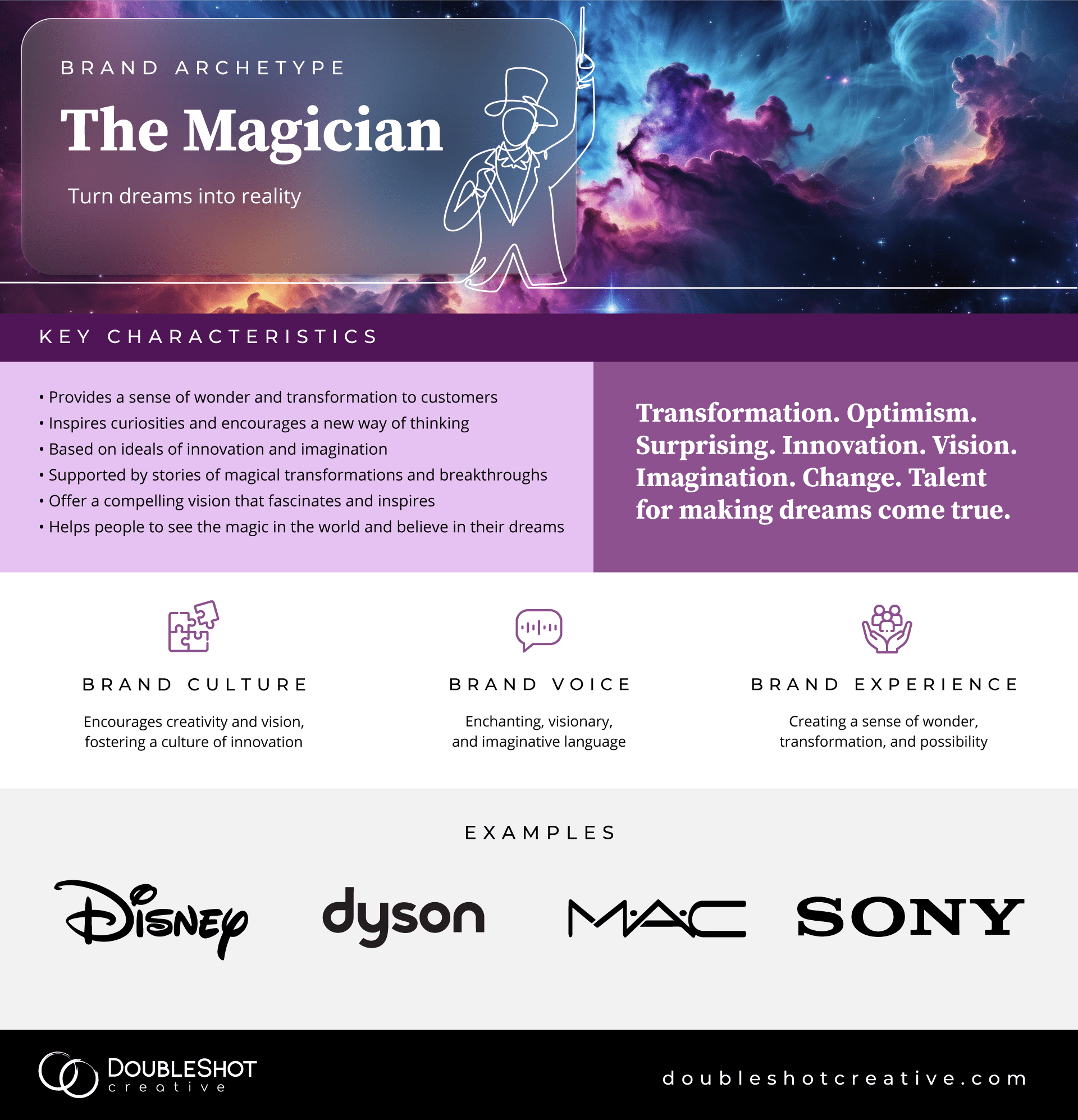
The Magician Brand Archetype is about creating transformative experiences and making the impossible possible. They value innovation and imagination and strive to bring about positive change.
Values: Transformation, possibility, mystique
Personality Traits: Magical, visionary, charismatic
Examples: Disney, Dyson, SONY, MAC Cosmetics
Magician brands focus on creating transformative experiences. You know you’re a true Magician brand when people are willing to pay triple for an everyday product—just like Dyson did with vacuums. They’ve transformed the mundane into must-have tech, from hair care tools to air purifiers, keeping customers hooked and eagerly waiting for whatever game-changing innovation comes next.
6. The Hero
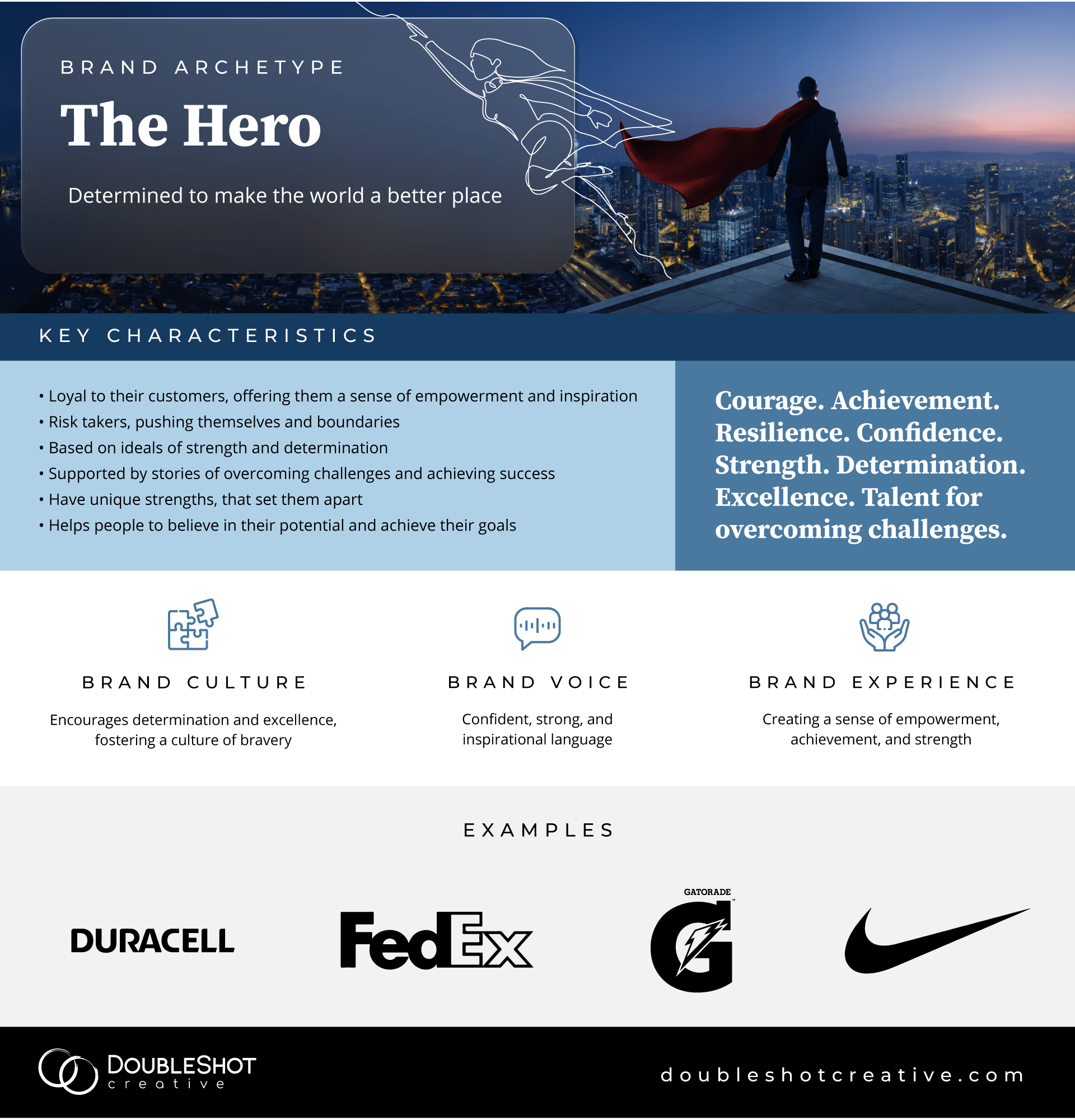
The Hero Brand Archetype is about showing courage and achieving greatness. They strive to make the world a better place by overcoming obstacles and demonstrating strength and determination.
Values: Courage, strength, resilience
Personality Traits: Confident, determined, inspirational
Examples: Nike, FedEx, Gatorade, Duracell
Hero brands are built on strength, resilience, and overcoming challenges. Nike’s Just Do It campaign is legendary for empowering athletes and everyday people to push their limits, while FedEx’s Tall Tales or True Deliveries truly position their team as super heroes.
7. The Lover
The Lover Brand Archetype is about creating deep, emotional connections and celebrating beauty and passion. They value intimacy and seek to create meaningful relationships.
Values: Passion, romance, sensuality
Personality Traits: Romantic, affectionate, intimate
Examples: Chanel, Hallmark, Godiva, Dior
Lover brands center on creating deep, emotional connections that celebrate beauty and passion. Take Tiffany & Co.’s “About Love” campaign, which spotlighted the iconic love story of Beyoncé and Jay-Z. It’s a perfect blend of romance, devotion, and timeless elegance—pairing luxurious jewelry with a couple whose connection exudes love and intimacy. Through this campaign, Tiffany captured the essence of modern love, reinforcing the power of emotional storytelling in brand identity.

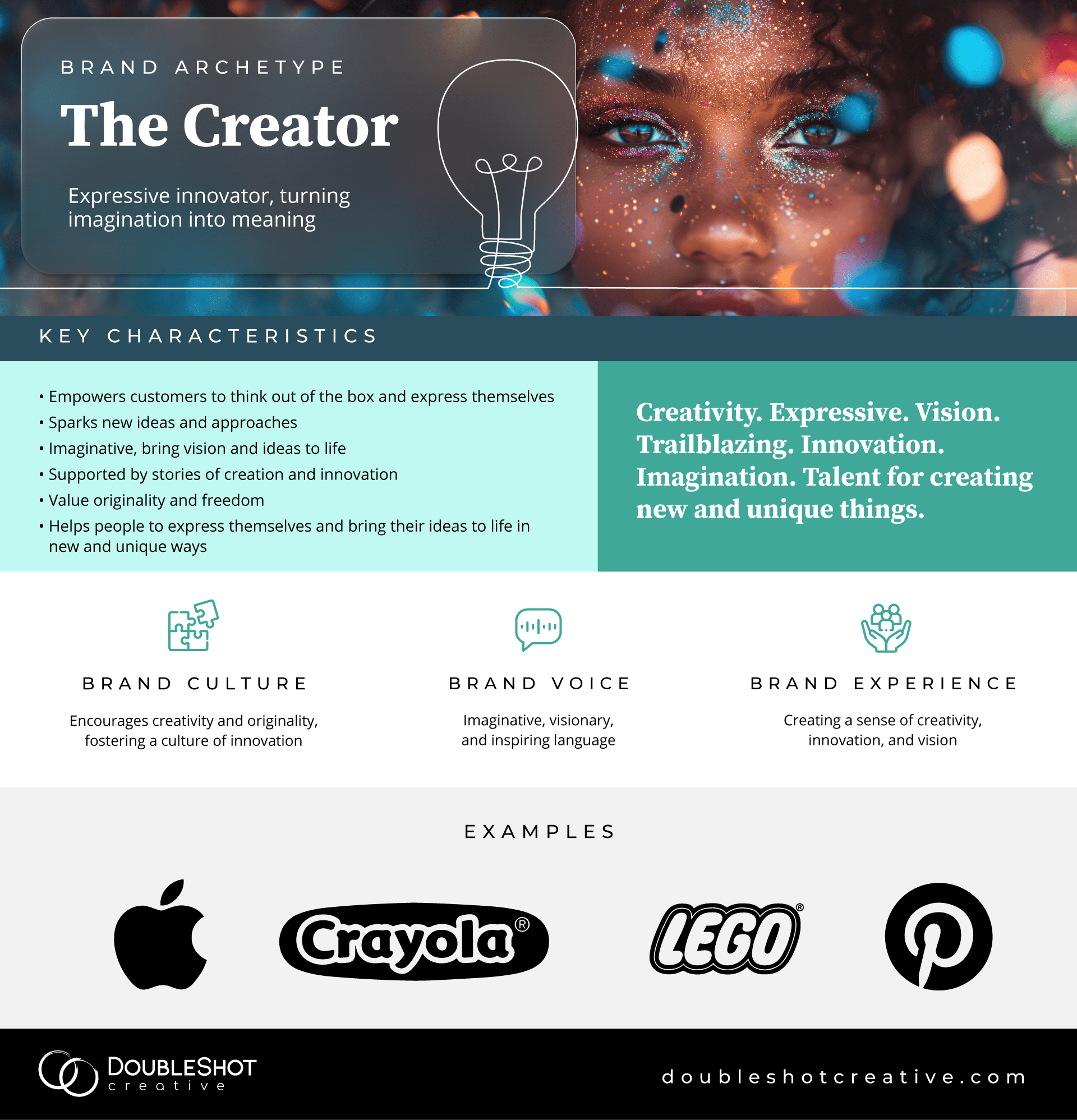
8. The Creator
The Creator Brand Archetype is about bringing imagination and innovation to life. They value creativity and vision, constantly striving to create new and unique things.
Values: Innovation, originality, self-expression
Personality Traits: Imaginative, inventive, visionary
Examples: LEGO, Apple, Adobe, Crayola, Pinterest
Creator brands focus on innovation and creativity. LEGO’s Rebuild the World highlights endless possibilities, while Crayola’s #StayCreative campaign, launched during the COVID-19 pandemic, encouraged families to use creativity as a way to stay engaged and connected at home. Through downloadable activities and virtual events, the brand inspired self-expression while fostering a sense of community online.
9. The Jester
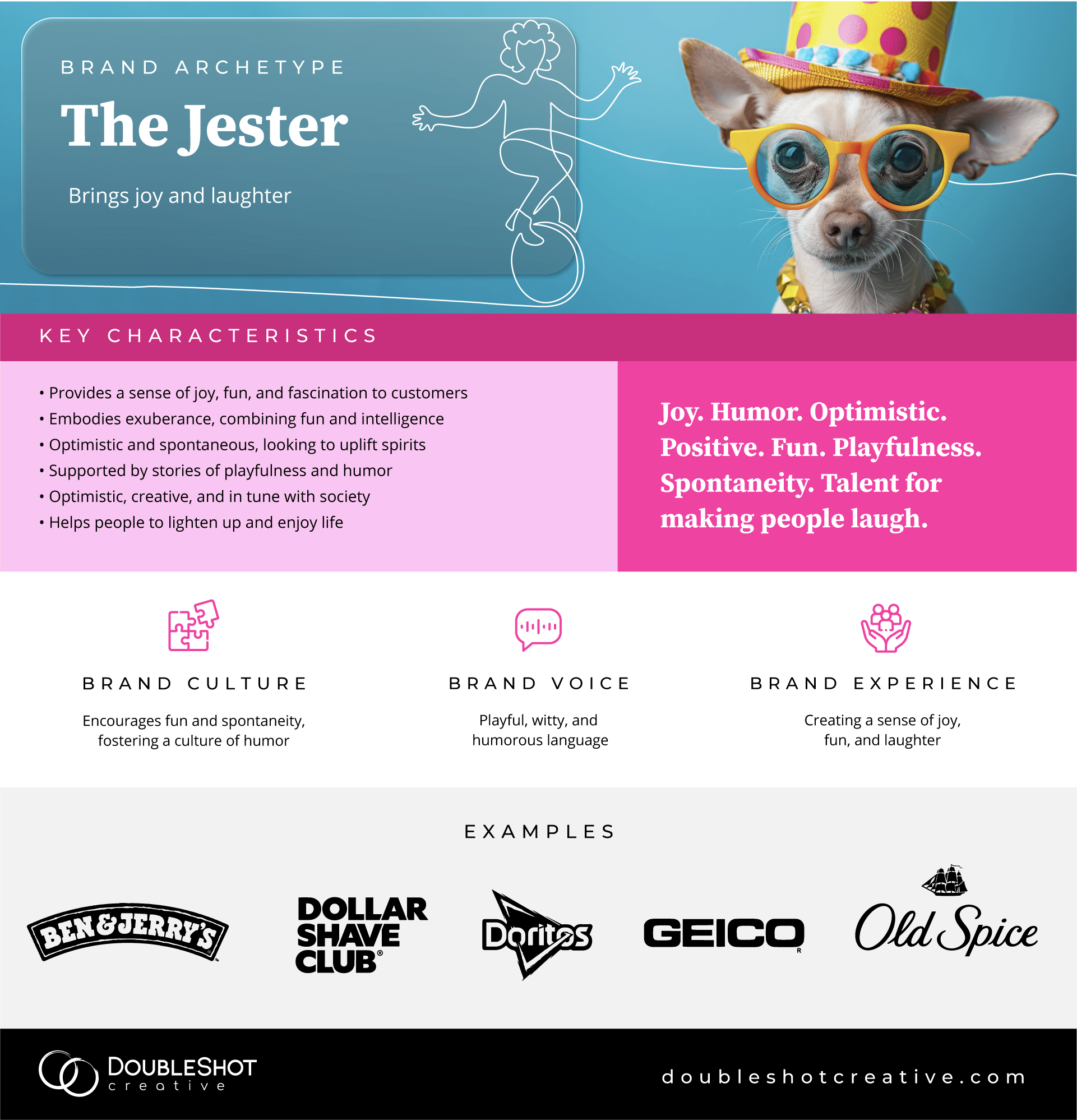
The Jester Brand Archetype is about bringing joy and laughter. They value humor and fun and seek to create a playful and spontaneous experience for their audience.
Values: Joy, spontaneity, humor
Personality Traits: Playful, witty, entertaining
Examples: Geico, Skittles, Old Spice, Doritos
Jester brands bring humor and playfulness to their messaging. Old Spice’s The Man Your Man Could Smell Like remains one of the funniest and most memorable ads, while Doritos’ Crash the Super Bowl empowered fans to create their own entertaining commercials.
10. The Everyperson
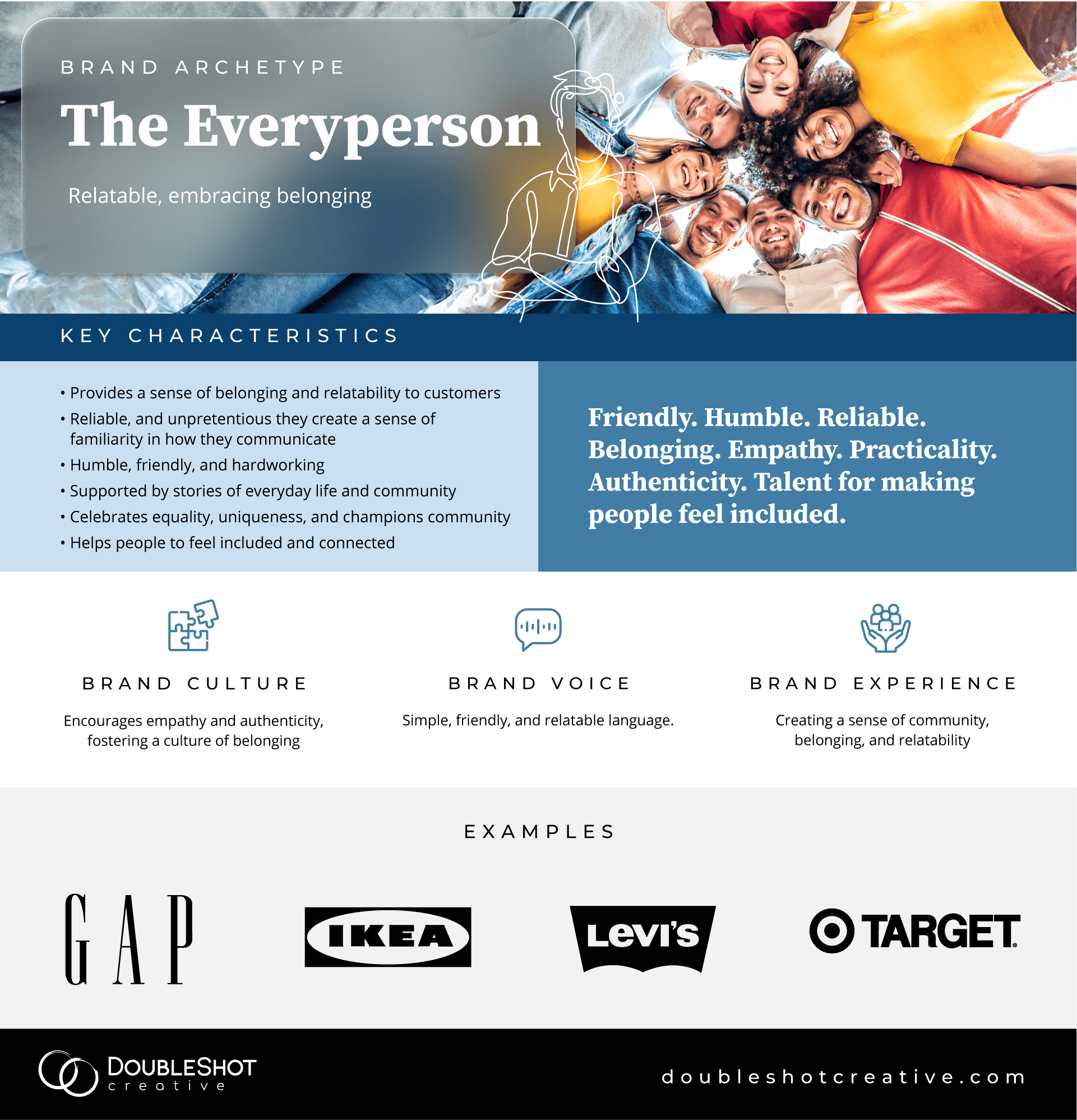
The Everyperson Brand Archetype is about being relatable and authentic. They value belonging and empathy, striving to create a sense of community and inclusivity.
Values: Relatability, authenticity, community
Personality Traits: Down-to-earth, humble, inclusive
Examples: IKEA, Target, GAP, Ford, Southwest, Discover
Everyperson brands focus on being relatable and down-to-earth. IKEA’s Where Life Happens campaign highlighted real families and how IKEA fits into everyday life, while Gap’s Fall 2023 campaign embraced inclusivity by featuring diverse creatives expressing their individuality with iconic Gap staples. Both brands emphasize accessibility and authenticity, resonating with everyday consumers.
11. The Caregiver
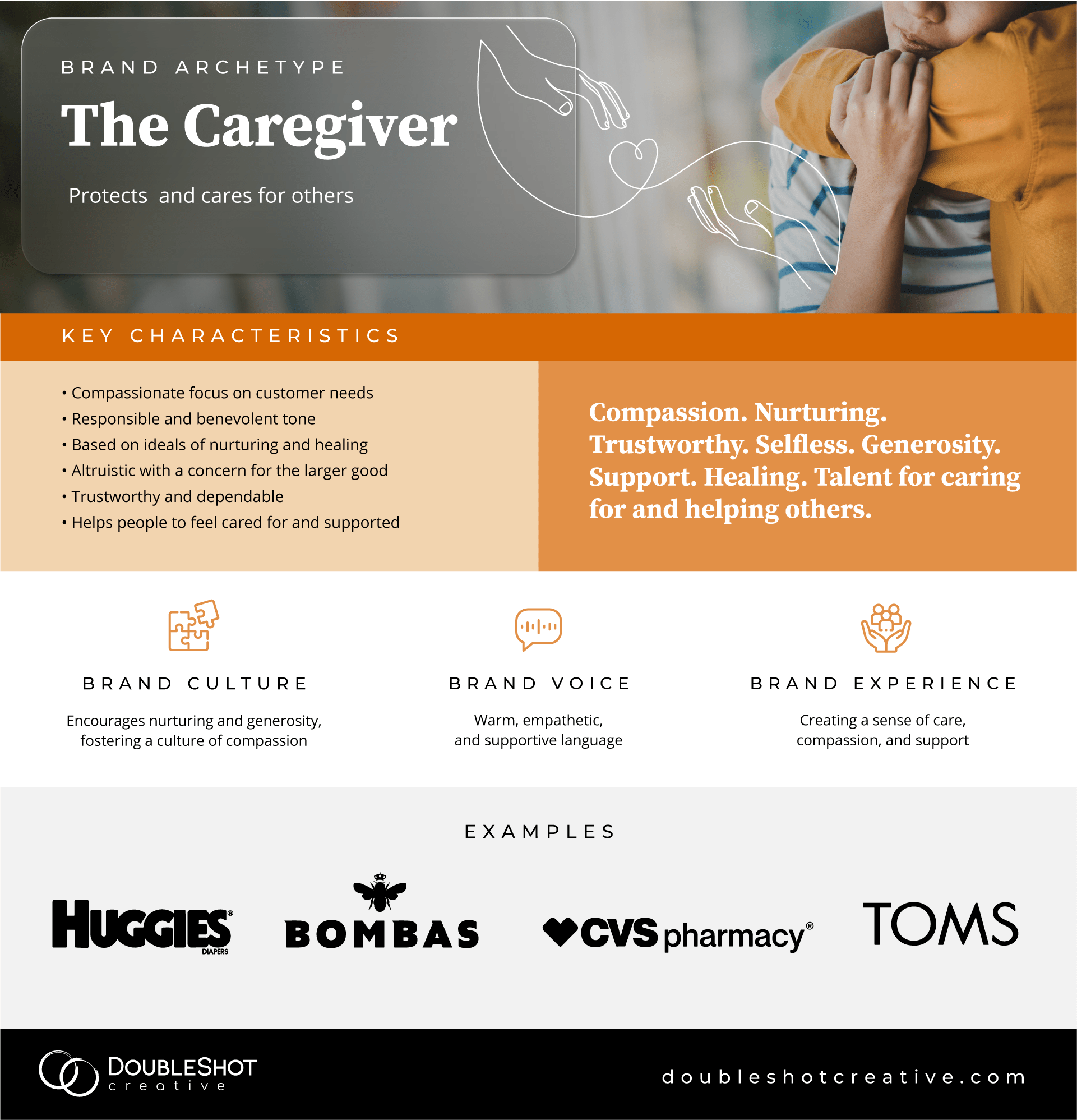
The Caregiver Brand Archetype is about compassion and nurturing. They value generosity and support, striving to care for and help others, creating a safe and supportive environment.
Values: Compassion, nurturing, support
Personality Traits: Empathetic, selfless, caring
Examples: Johnson & Johnson, TOMs, Burt’s Bees, Huggies, Volvo
Caregiver brands focus on nurturing and supporting others. Johnson & Johnson’s For All You Love showcased empathy and care for families, while Burt’s Bees’ Greater Good emphasizes its dedication to sustainability and community.
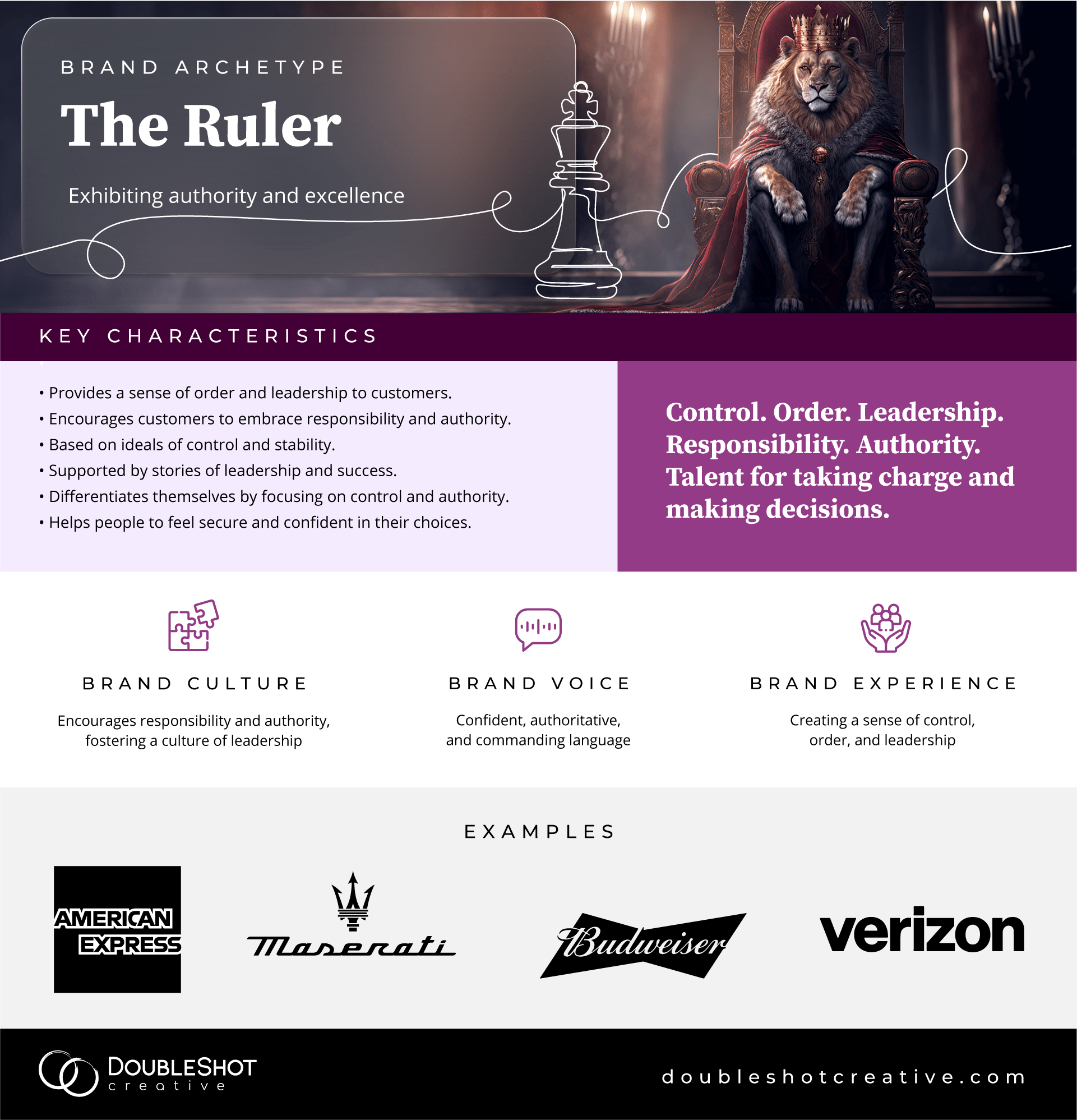
12. The Ruler
The Ruler Brand Archetype is about control and leadership. They value order and responsibility, striving to take charge and make confident decisions to ensure stability and success.
Values: Leadership, authority, control
Personality Traits: Confident, commanding, influential
Examples: Mercedes-Benz, Rolex, American Express, Verizon
Ruler brands exude authority and control, commanding respect through high standards. Mercedes-Benz’s The Best or Nothing conveys the prestige and luxury of the brand, while American Express’ Don’t Live Life Without It promotes exclusivity and security.
Brand Archetype Comparison Table
Use this as a quick-reference guide to understand how each brand archetype shows up at a glance.
| Archetype | Core Desire | Values | Traits |
|---|---|---|---|
| Innocent | Happiness | Purity, simplicity, optimism | Honest, sincere, trustworthy |
| Sage | Truth | Wisdom, knowledge, insight | Wise, analytical, insightful |
| Explorer | Freedom | Freedom, adventure, discovery | Curious, independent, adventurous |
| Rebel | Revolution | Nonconformity, independence, creativity | Bold, rebellious, unconventional |
| Magician | Transformation | Transformation, possibility, mystique | Visionary, imaginative, charismatic |
| Hero | Mastery | Courage, strength, resilience | Confident, determined, inspirational |
| Lover | Connection | Passion, romance, sensuality | Romantic, affectionate, intimate |
| Creator | Innovation | Innovation, originality, self-expression | Imaginative, inventive, visionary |
| Jester | Enjoyment | Joy, spontaneity, humor | Playful, witty, entertaining |
| Everyperson | Belonging | Relatability, authenticity, community | Down-to-earth, inclusive, approachable |
| Caregiver | Service | Compassion, nurturing, support | Empathetic, selfless, caring |
| Ruler | Control | Leadership, authority, control | Confident, commanding, influential |
Brand Archetype FAQs
Q: How do I choose the right brand archetype?
Choosing the right brand archetype starts with understanding the emotional role your brand plays in your audience’s life.
Ask yourself:
– What emotional response do we want to create?
– Are we guiding, supporting, challenging, or transforming our audience?
– What values define our brand at its core?
The goal is to select an archetype that reflects who you truly are—not just what you aspire to be.
Q: Can a brand have more than one archetype?
Yes—but most strong brands have one primary archetype and may incorporate a secondary influence.
Trying to embody too many archetypes can dilute your messaging and make your brand feel inconsistent.
Q: How do brand archetypes fit into brand strategy?
Brand archetypes are one component of a larger system.
They should align with your overall brand strategy and positioning, including:
– Messaging
– Visual identity
– Customer experience
Without this alignment, even a well-defined archetype can feel disconnected.
Q: What happens if my brand archetype isn’t clear?
If your brand archetype isn’t clearly defined, your brand may feel:
– Inconsistent
– Hard to describe
– Forgettable
Clarifying your archetype helps create a more cohesive and recognizable brand personality.
Ready to Define Your Brand?
If your brand feels inconsistent or hard to articulate, your strategy—not your design—may be the issue.
Your archetype is where clarity begins.
A strong brand isn’t just seen—it’s felt. If you’re ready to build a more cohesive and impactful brand, explore our brand identity and strategy services or get in touch to start the conversation.